

Let's Color! part 3
Expand & experiment with hidden hues...

Hopefully life is feeling more colorful. Generously share your practice with others and ask them to suggest what you should paint next. I love it when someone brings me “something to paint” because then I know that they too are looking closely at the world around them. I believe paying attention with an open heart is good for us all.
Cultivate play
This week’s advice is to cultivate play. In addition to expanding how we describe color, we can experiment with the actual colors in our palette of paints – let yourself randomly mix and explore color and shape.
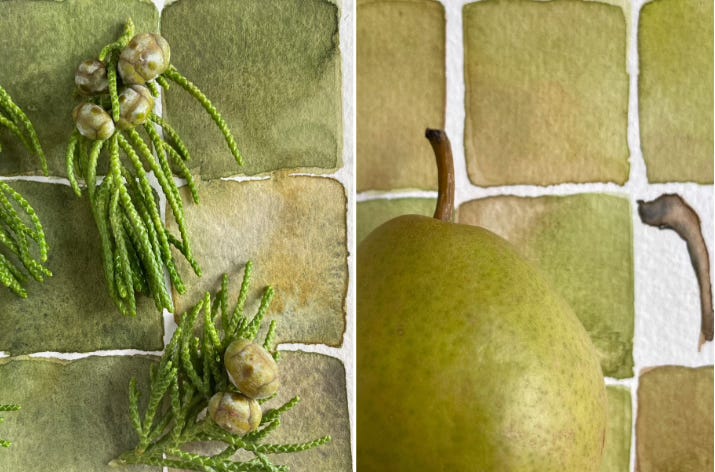
Start by exploring a range of effects that are possible when mixing two colors together. Even when working with a limited palette, myriad colors are possible, including some that may surprise you. Remember to save your swatches and label what paints you were using so you have a record you can refer to.
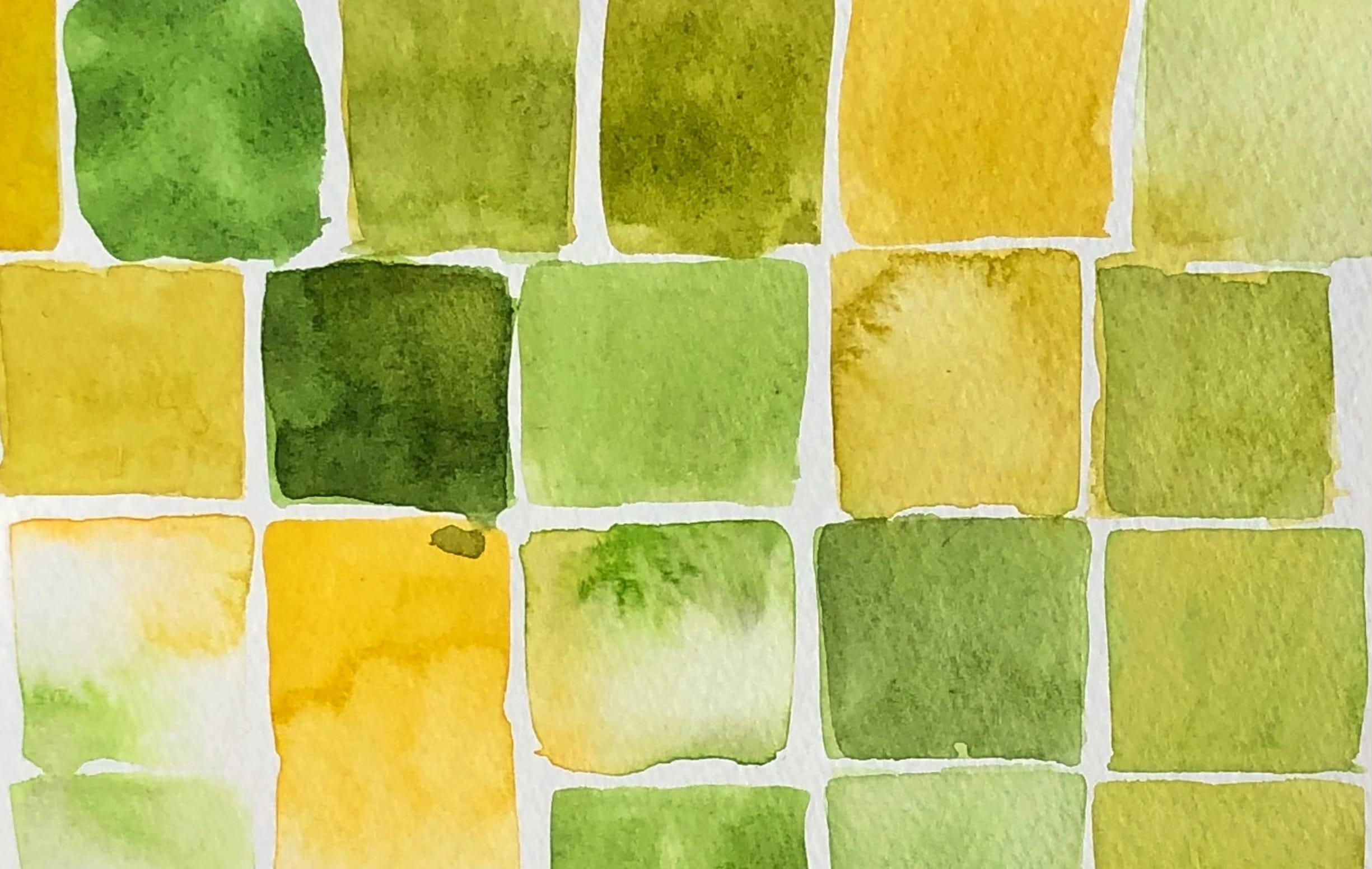
Here are some ideas to get you started:
Paint some sample swatches of a single hue.
Mix two or more colors in differing amounts. For instance, add a bit of green to your yellow — or the reverse. There are infinite versions of yellowish green or greenish yellow, especially when you’re trying to capture the colors of nature.
Dilute the colors you mixed with water and see how sheer a wash you can create.
Using your brush, wet a part of your paper before laying down color and see how the paint responds and moves about.
Let wet colors touch and watch how the paints bleed together.
Once a swatch is dry, add another wash, or glaze, on top of it. You can build up the intensity of the same color or choose a contrasting or moderating hue.
Charting Colors
Charting takes exploration to the next level. You can approach charting colors, that is mixing pigment in a proscribed way and documenting the results, in a number of ways. Check out this collection of Creativebug classes that I’ve put together to inspire further color explorations. Several of the classes include color charting instructions.
Now that you’re loosened up from playing with color, put some of your discoveries into your next color study. Mess around with using wet-into-wet, sheer glazes, and color mixes to pick out details in your finished work.
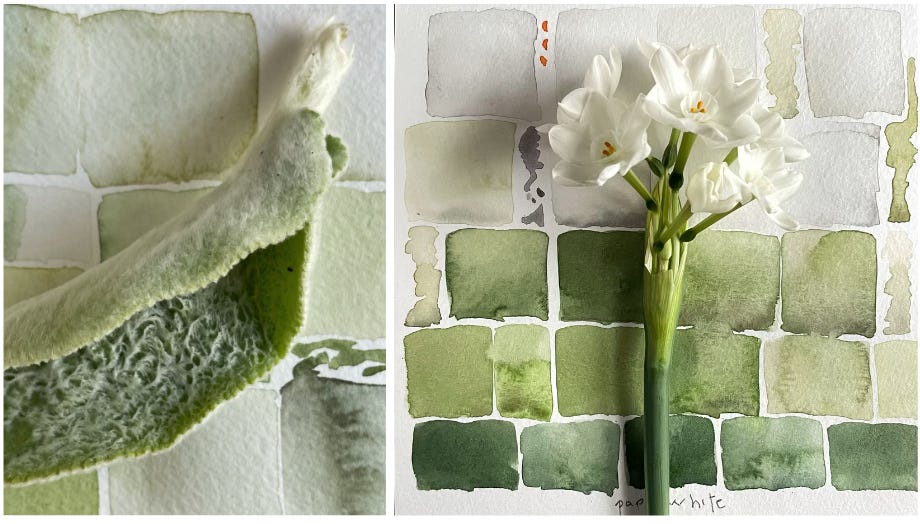
Regardless of what you think about your finished color studies, pay attention to how you’re beginning to pay attention. I’d be willing to guess that you can see more than you used to.

For more inspiration and daily prompts check out my daily color series on Creativebug
Color In and Out of the Garden