On the Rocks
a handmade garden — Feature Attractions

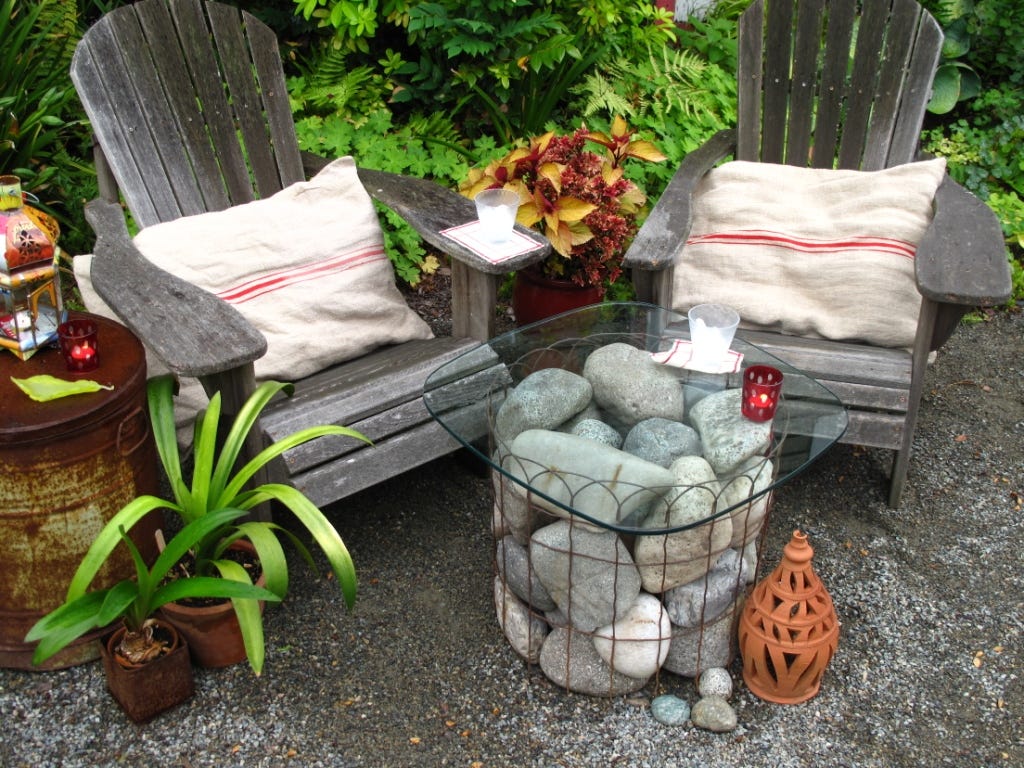
It’s easy to create a swank surface for the evening cocktail hour — garden style — with a ring of vintage wire fencing, a pile of rounded river rocks, and a repurposed glass top. My backyard lounge table, located where it gets afternoon shade and furnished with weathered by well-loved Adirondack chairs, is a wonderful place to sit back, relax and toast the beauty of a summer evening.
My table’s wire base is fashioned from a scrap of vintage “hairpin” fencing that was destined for the dump until I salvaged it from an abandoned garden in my neighborhood. I love the extra detail and character of its crimped and scalloped edge, which is easily seen through the clear glass top. This sort of vintage fencing can often be picked up for a song at garage and tag sales, however any sort of heavy duty metal fencing may be used and is available by the roll at most hardware stores.


If your garden does not produce an annual “harvest” of stone, source 10- to 12-inch river rocks at stone yards or landscape materials supply yard. Safety tempered glass is best for outdoor applications. You can purchase ready-made glass tabletops at import stores or custom order through hardware stores and glass suppliers; I found my glass top at a garage sale. I recommend starting with your glass top and adapting the size of your rock base to fit. Directions are for a 24-inch square glass tabletop with rounded corners that sits on a base approximately 20-inches in diameter.
Materials:
Heavy duty, metal “hairpin” fencing
Roughly 30 to 40 10- to 12- inch river rocks
Tempered glass tabletop
Tools & Other Supplies:
Bolt cutters
Pliers
Instructions:
1. Form wire cylinder. Trim wire fencing to an 18 x 60-inch rectangle. If you are using hairpin fencing the scalloped top will be the top of the table supporting the glass top. The opposite border — the bottom — should be clipped to a finished edge if you are working with fencing material taller than your finished table base will be. Connect the vertical sides of the frame to form a cylinder by clipping wires and wrapping them around the opposite side, crimping with pliers to secure.
2. Position table. Set cylinder in place and fill the wire frame with river rocks. Place flat sides of stones so they sit flush to the walls of the wire frame. Arrange the top tier of stones to provide a level surface so your glass top doesn’t teeter but rests securely on the wire rim of the frame.

Or try this:
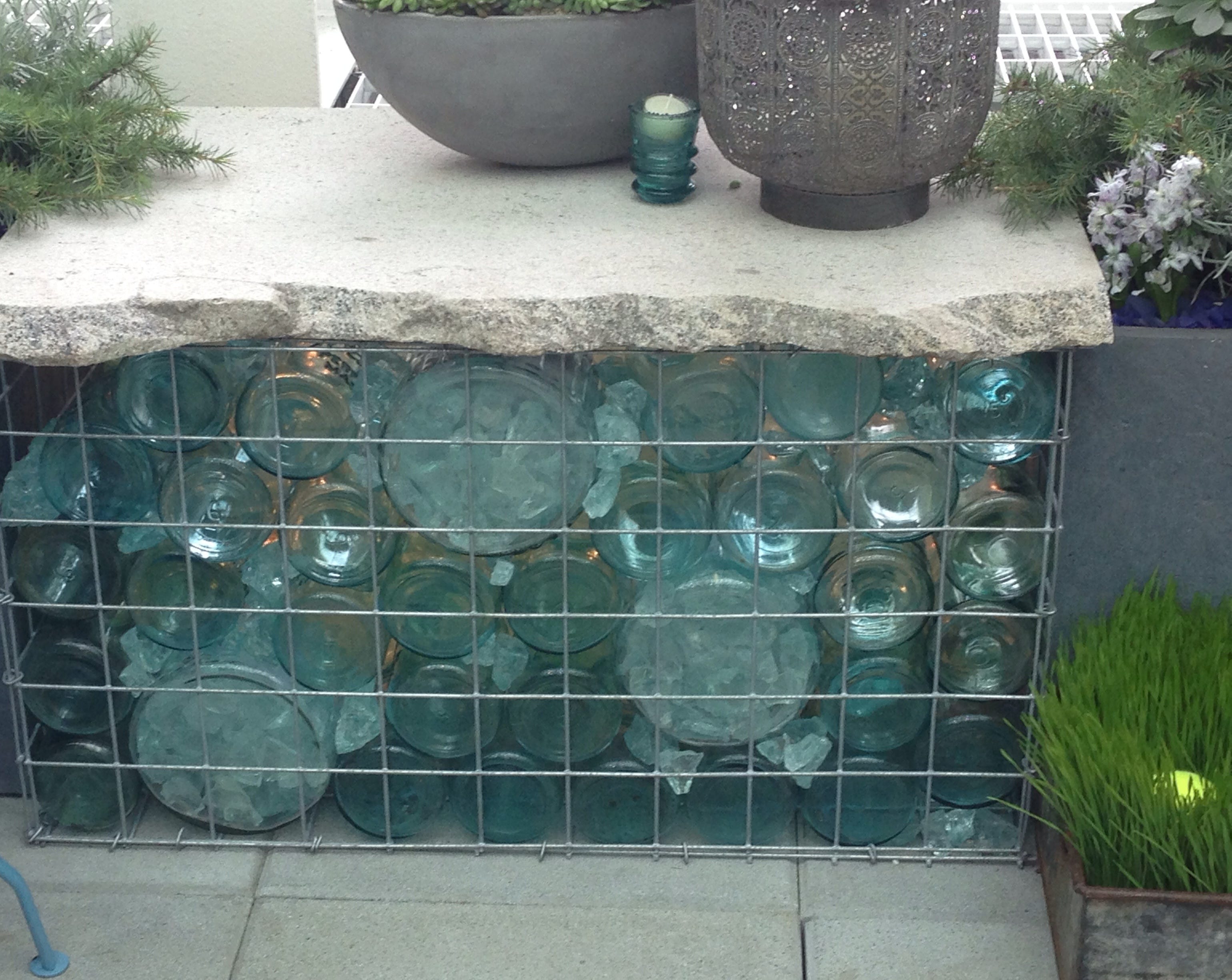
Ready made gabion units, like the steel version pictured above are available from landscape materials vendors. Filled with a collection of sea glass blue bottles, the small shelf topped with a stone slab is a stylish feature that plays with light.
Welded gabion structures
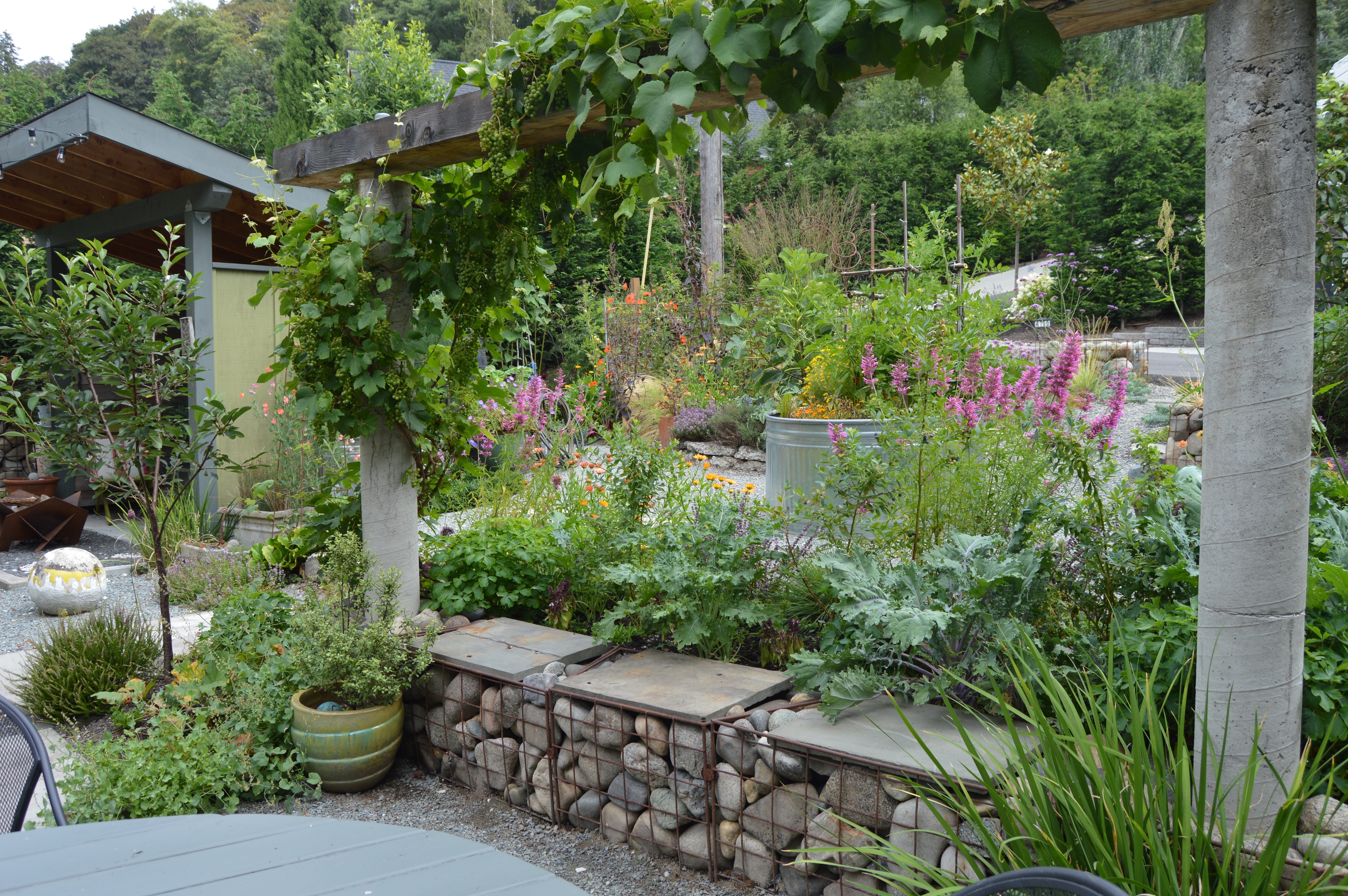
Welded wire mesh boxes, cylinders or baskets filled with stone repurposed broken concrete, or “rip rap” are called gabions. An adaptable building method with roots in Ancient Egypt, today gabions are widely used in civil engineering projects to effectively and economically construct retaining walls and shore up waterside and highway embankments. Gabions scaled down to backyard dimensions make for stylish, economical and sustainable garden walls, furnishings, and decorative structures. The straightforward material required — standard wire concrete underlayment with 3-inch openings and smooth iron bar — are regular stock and most hardware stores, metal shops, and industrial scrap yards.
While actual welding is beyond the scope of most DIY garden crafters, finding someone to do the work for you is easier than you might think. Check with local community abdominal technical college programs for student with access to tools and equipment looking for a class project. Auto body shops, metal artists and scrap metal yards are other possibilities. If you really want to tackle the job yourself, sign up for a beginner-level metal working class through a local art school or metal fabricator.
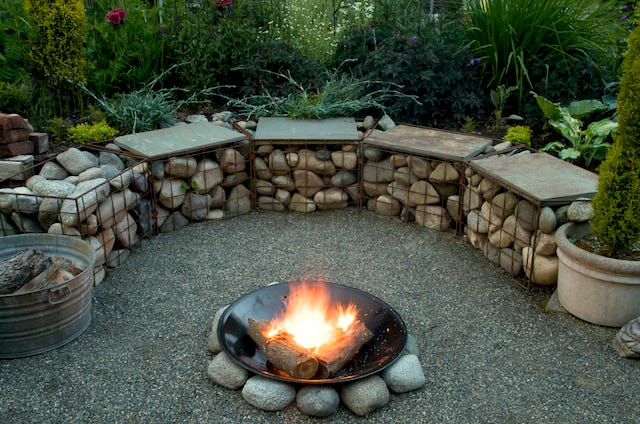


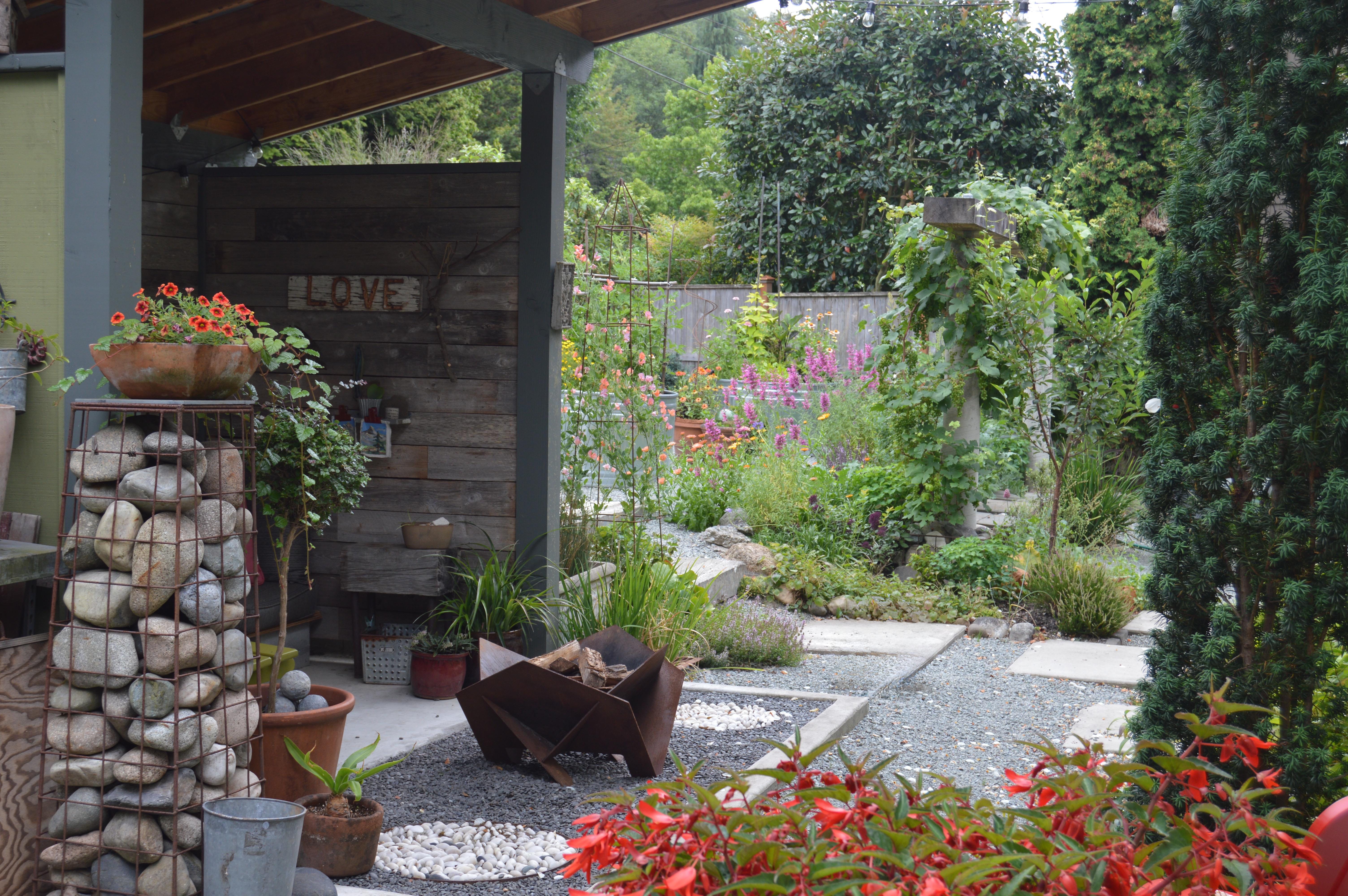
Filled with rock or repurposed broken concrete, these gabion structures are a repeat motif used in throughout the garden. In another example of flexible hardscape, originally the individual gabion units were arranged to form a semi-circular bench. Later the elements were re-conformed into a straight run to make a bench and several DIY retaining walls between levels in the landscape. Flexible indeed, but we did move a ton of rock.